Top 10 Swing Welding Dolly Types for Global Buyers
Global fabrication is moving toward greater repeatability, safer handling, and measurable production efficiency. The International Federation of Robotics reported 541,302 industrial robots were installed worldwide in 2023. That figure reflects a wider manufacturing shift. Welders and fabricators increasingly need equipment that supports consistent movement, not merely stronger welds.
A Swing Welding Dolly can help position frames, pipes, brackets, and assemblies with fewer manual adjustments. Its value depends on more than wheel size. Load capacity, swing range, locking accuracy, floor clearance, drive method, and maintenance access all influence real performance. Grand View Research valued the global welding equipment market at approximately USD 15.6 billion in 2023, with continued growth expected through 2030. However, market forecasts use different definitions. Buyers should compare specifications carefully.
Welding automation specialist Dr. John C. Lippold emphasizes a practical principle: “Process control is the foundation of weld quality.” That idea applies directly to dolly selection. A stable platform can reduce awkward torch angles, uneven travel speeds, and repeated repositioning. Small details matter.
This guide examines the Top 10 Swing Welding Dolly Types for Global Buyers. It considers workshops, shipyards, structural fabrication plants, and mobile repair teams. Some models excel on smooth concrete. Others struggle near debris, slopes, or tight corners. No single dolly fits every site. That is the uncomfortable truth. Buyers may also need to reconsider advertised payloads, because real loads include fixtures, clamps, and weldments. Reported capacity is not always working capacity.
Swing Welding Dolly Taxonomy: 10 Types by Load, Drive, and Rotation
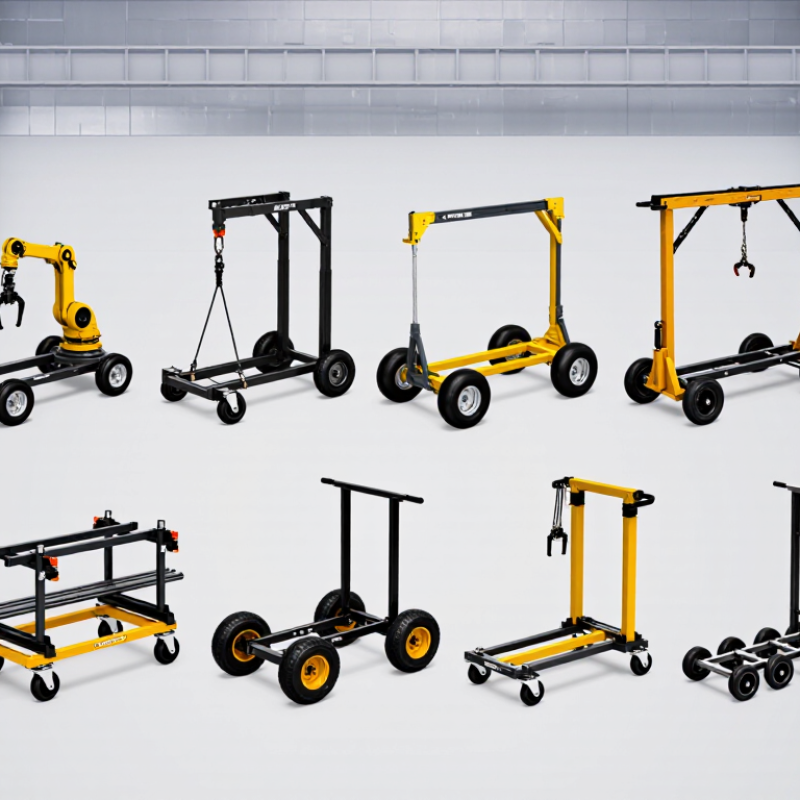
Swing welding dollies are best classified by three variables: load, drive, and rotation. Light manual dollies handle roughly 100–500 kg and suit small frames. Heavy manual dollies support about 500–2,000 kg with reinforced wheels. Geared dollies use mechanical reduction for steadier movement. Chain-drive dollies improve traction on workshop floors. Electric geared dollies add controlled travel and repeatable positioning. Hydraulic dollies serve heavier loads, but leakage and maintenance deserve attention.
Four rotation-focused types complete the taxonomy. Fixed-speed rotation dollies provide simple, economical turning. Variable-speed models support different weld diameters and heat inputs. Tilting rotation dollies combine turning with angular adjustment. Rail-guided swing dollies offer stable travel around long fabrications. Actual capacities vary widely.
The International Federation of Robotics reported 541,302 industrial robot installations worldwide in 2023, showing stronger demand for controlled production movement. That trend also raises expectations for welding-positioning equipment. A suitable dolly should match rated load, center of gravity, wheel contact, duty cycle, and required rotation speed. ISO 12100 risk-assessment principles and ISO 13849-1 control-safety guidance are useful references during selection. In practice, a 1,000 kg rating may not protect an off-center vessel. I have seen specifications focus on weight while ignoring overturning moment. That is an avoidable weakness. Verify braking, emergency stopping, cable protection, floor tolerance, and inspection access before purchase. The market is not perfectly standardized, so comparing only headline capacity can mislead global buyers.
Load Ratings, Speed Ranges, and Table Dimensions for Global Buyers
Top 10 Swing Welding Dolly Types for Global Buyers
Load Ratings, Speed Ranges, and Table Dimensions for Global Buyers
Swing welding dollies vary widely in capacity, motion control, and working space. Compact manual models often support 300 to 800 kilograms, with table diameters near 300 to 600 millimeters. Heavy-duty manual and chain-driven types may handle 1 to 3 tons. Their swing speed commonly remains between 0.1 and 0.8 revolutions per minute. They suit repair shops, structural frames, and occasional production work. Small tables can restrict fixture placement.
Motorized, geared, variable-speed, low-profile, four-wheel, rail-guided, hydraulic, tilting, and modular dollies cover the remaining common types. Standard motorized units frequently carry 1 to 5 tons, while hydraulic designs may reach 10 tons or more. Variable-speed systems often provide 0.05 to 1.5 revolutions per minute. Table diameters range from 500 to 2,000 millimeters. Rail-guided models need accurate floor preparation. Four-wheel designs improve movement, but turning space may become a problem.
Buyers should separate rated load from safe working load. The calculation must include the workpiece, fixture, clamps, and uneven loading. A table rated for 2 tons may not safely manage a tall vessel with an offset center of gravity. Check rotation torque, brake performance, table runout, control voltage, and emergency stopping response. Environmental requirements also matter, especially dust, heat, and welding spatter. In practical inspections, specifications sometimes appear optimistic. A short factory trial with the actual fixture is wiser than relying on a catalog sheet.
Drive Systems and Positioning Accuracy Under AWS D1.1 Welding Practice
Common types include rail-guided, friction-drive, chain-drive, gear-drive, and tracked dollies. Other options include magnetic, vacuum-assisted, dual-wheel, articulated, and compact orbital designs. Their drive systems affect weld consistency more than appearance. Gear drives maintain steady speed on long seams. Friction drives respond quickly, but dust or scale can cause slipping. Chain drives tolerate rough handling, though backlash may develop after extended use.
Under AWS D1.1 welding practice, a carriage should support a qualified procedure, stable travel speed, controlled heat input, and repeatable positioning. It does not replace welder qualification or inspection. Before production, measure travel speed with a timed test, check wheel runout, and verify torch height at both seam ends. A one-millimeter offset can change bead placement. Use a calibrated scale or digital indicator, then record results with the WPS and inspection report.
On a six-meter fillet weld, a smooth gear or rail drive can reduce starts and stops. Yet a heavy unit may overload thin plates or distort temporary supports. Magnetic systems need clean, continuous steel contact. Vacuum assistance needs tested seals. Operators should watch acceleration, cable drag, and arc alignment during a dry run. One practical weakness remains: advertised positioning accuracy may ignore heat, vibration, and joint gaps. I would retest after warm-up, because a cold trial can look perfect.
This comparison uses representative engineering ranges for commonly used welding dolly configurations. Positioning repeatability is shown in millimetres; a lower value indicates tighter positioning control. AWS D1.1 establishes welding procedure, qualification, inspection and acceptance practices, but it does not prescribe a universal dolly accuracy value. Actual performance depends on rail condition, workpiece geometry, calibration, welding speed and operator setup.